DTF
DTF, for Direct to Film, is a digital textile printing technique: the design is printed on a film, coated with a hot-melt powder, then heat-pressed onto the garment. Its strength: it works on almost any textile, cotton included, light or dark.
DTF in practice
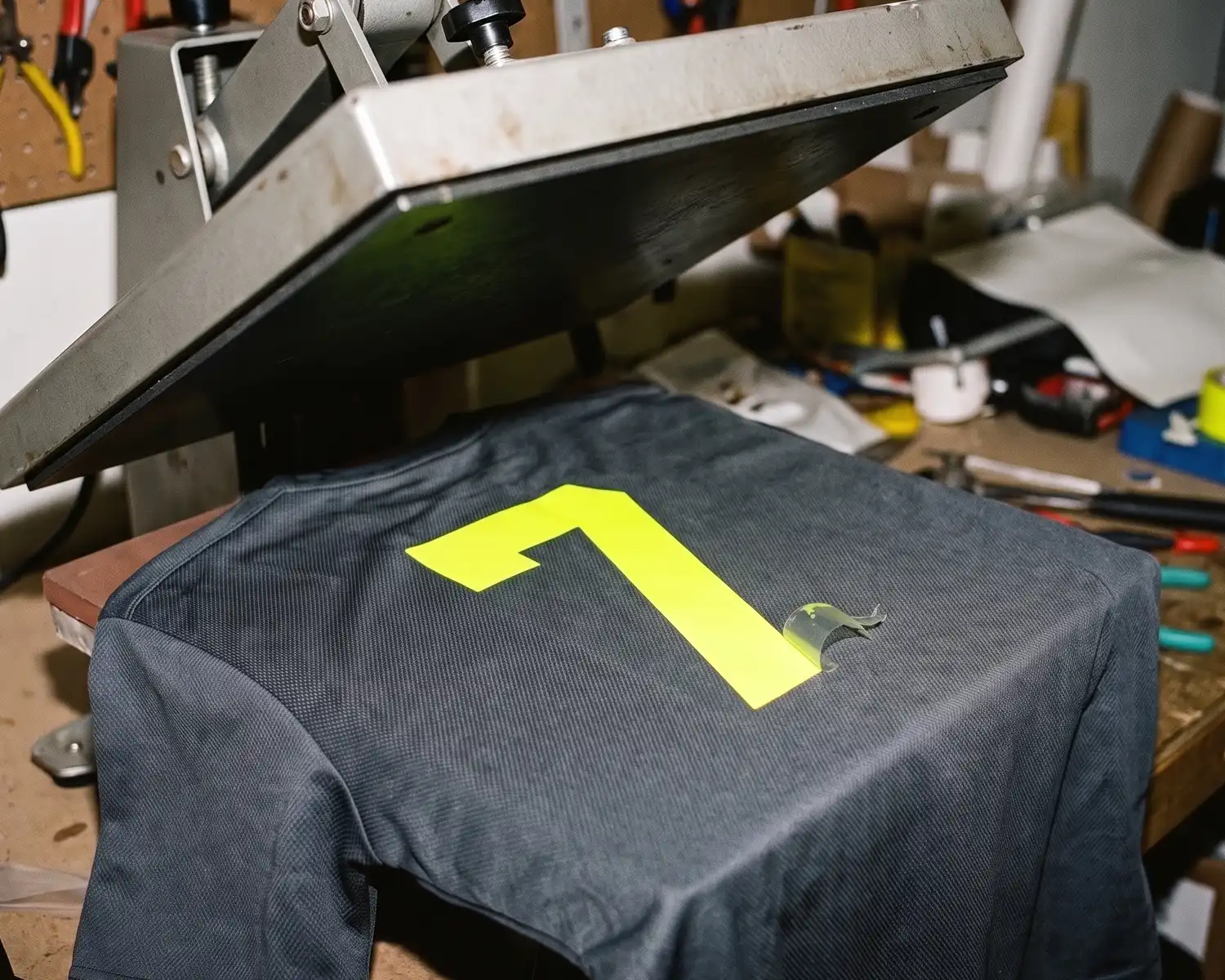
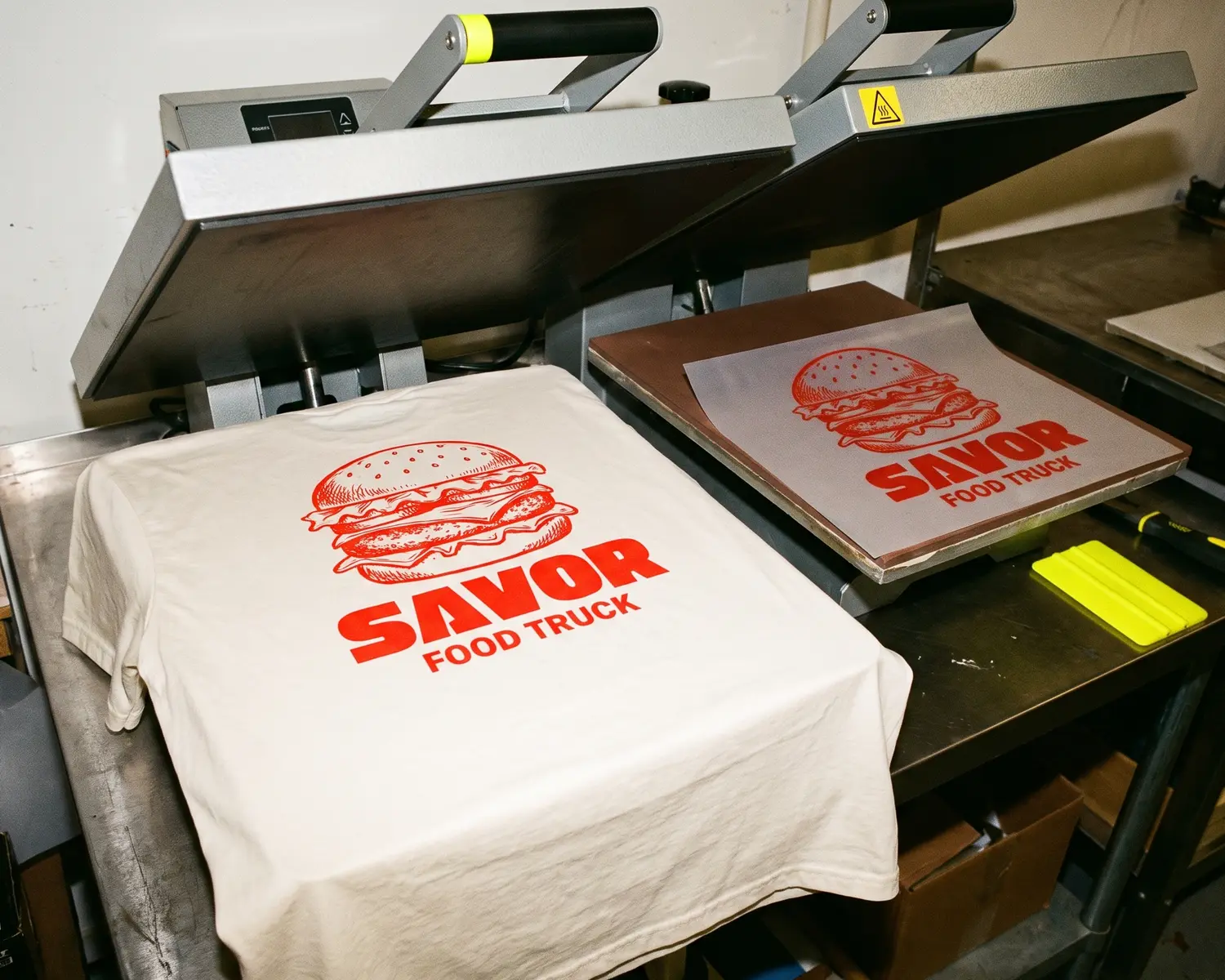
In the workshop, everything starts with printing the design on a transparent film, using pigment inks that include a white underbase. The still-wet film receives a hot-melt powder, goes through an oven, then waits for the press: laid on the garment and heat-pressed, the design leaves the film and bonds to the fabric. That white underbase is the key to the process: it is what allows bright colors on a dark textile, where many techniques require a light background.
What explains its rise comes down to two advantages. First, the freedom of the design: gradients, photos, fine details and unlimited colors go through in a single print, where a flex transfer has to be cut shape by shape and color by color. Second, no fixed setup costs: no screen to prepare as in screen printing, so the cost stays reasonable from a single piece and on small runs. The finish is supple, slightly satin, stretchy, and resists cracking well over washes.
Its limits are those of its family: the design forms a film on the fabric's surface, noticeable to the touch on large solid areas, unlike sublimation which dyes the fiber itself. And on a large run with a simple design, screen printing becomes cheaper per piece again. That is why DTF has become the workshops' answer for small and medium multicolor runs, and often the technique actually used when a customer asks for flocking. To place each process in the bigger picture, the full landscape of techniques covers the whole question.
What to remember
- DTF prints the design on a film, powders it with hot-melt adhesive, then heat-transfers it: the design bonds to the fabric.
- Its white underbase opens up almost every textile: cotton, polyester, blends, light or dark backgrounds.
- No fixed costs, so viable from a single piece; on large runs with a simple design, screen printing stays cheaper per piece.
FAQ
Questions fréquentes
Does DTF crack in the wash?
No, that is one of its qualities: the design is stretchy, it follows the fabric instead of fissuring the way older transfers did. Washing inside out at low temperature extends its life further, as with any decoration.
Does DTF replace flocking?
In many cases, yes: when a customer asks for flocking on a multicolor or detailed design, what the workshop actually produces is often a DTF. Cut flex keeps its recognized niches: jersey names and numbers, single-piece personalization and some technical fabrics.
Passer à l'atelier
Vous savez ce qu'il vous faut. Trouvez l'atelier qui le fait.
L'annuaire recense les ateliers ville par ville, avec leurs techniques et leur contact direct. Un devis rapide vous répond sous 24 h.