A heat-applied vinyl marking most often costs 2 to 15 euros per piece: 5 to 15 euros for a single item, 2.50 to 4.50 euros from 25 pieces, under 2.50 euros for large runs (market survey, September 2026, public price lists from seven French providers).
The essentials in 4 points:
- For a single piece, human labor dominates: expect 5 to 15 euros for the marking, and 15 to 20 euros for a complete garment including the textile.
- In runs, the per-piece price divides by 2 to 4 from around fifty pieces, and drops below 2.50 euros beyond 100 pieces.
- A fixed setup fee (file, proof, calibration: often 11 to 15 euros) weighs heavily on one piece and vanishes across a run.
- Always check what the price includes: marking only or complete garment, tax included or not.
Search for the price of textile printing and you will find everything: 13 cents per logo from a transfer seller, 20 euros per t-shirt at a Paris workshop. All these figures are true, and none answers your question, because each describes a different case without saying so. This guide does what no workshop will do: survey the market's public price lists (chains, workshops, platforms), compare them, and give you the mechanics that explain YOUR price. Kosmos Network sells no printing: the figures below are a survey, not a rate card.
Textile printing prices: the observed ranges
Survey conducted on September 10, 2026 across the public price lists of seven French providers: a major sporting-goods chain, customization workshops (Paris and regions) and online platforms. The ranges below are prices PER PIECE, marking only (the textile is extra when you do not supply it), often excluding tax.
| Your case | Observed range | What explains the gap |
|---|---|---|
| Name + number on a jersey | 5 to 15 euros per piece for singles; around 3 euros per piece from 100 | text size and quantity |
| Simple 1-color chest logo | 4 to 9 euros for singles; 2.50 to 4.50 euros from 25-50 pieces | fixed fees get amortized |
| Multi-color marking | 6 to 10 euros per piece in small runs | each color adds work or a film |
| Run of 10 to 25 pieces (pro chain) | around 4.50 euros single-color, 6 euros multi | a national chain's public price list |
| Large run (100 to 500 pieces) | 1.60 to 2.50 euros per piece | volume crushes the fixed fees |
| Very large run (1000+) | 1.20 to 1.80 euro per piece | same, the market floor |
| True velvet flocking | 9.50 to 12.50 euros per piece in small runs | specialized material and application |
| T-shirt supplied by the workshop, printed, single | 15 to 20 euros complete piece | textile + marking + single-piece labor |
Two constants run through every price list: a fixed setup fee (file, proof or calibration fees, often 11 to 15 euros) that weighs heavily on 1 piece and disappears in a run; and steep volume discounts, with the per-piece price divided by 2 to 4 between a single item and fifty.
Why it varies so much: the 5 things that make the price
A printing quote is not a random number. Five things build it, and you control most of them.
Surface area. Many workshops charge vinyl by surface (one public price list shows 1 euro per square centimeter as a base). A small chest logo mechanically costs less than a full back: it is the first cost driver.
Number of colors. In classic vinyl work, each color is a separate film to cut and apply: multi-color costs more than single-color. It is also what pushes complex designs toward DTF transfer, where color costs nothing.
Quantity. Fixed fees (file, proof, calibration) are paid once: on one piece they nearly double the price, on fifty they disappear. It is THE reason for the spectacular gaps between figures on the web.
The actual technique behind the word. "Flocage" covers classic vinyl, true velvet flocking (more expensive), special finishes (glitter, puff), and often, in reality, a DTF transfer or screen printing depending on your design and volume (our comparison of techniques helps sort it out). Embroidery plays in its own league: more expensive in small runs, it pays for its premium finish and durability. Same word, different prices.
Who supplies the textile. A marking-only price and a complete-garment price have nothing in common. It is the classic trap when comparing quotes: always check what the figure includes, textile, marking, file preparation, and whether it excludes tax.
Three concrete cases, priced with the survey
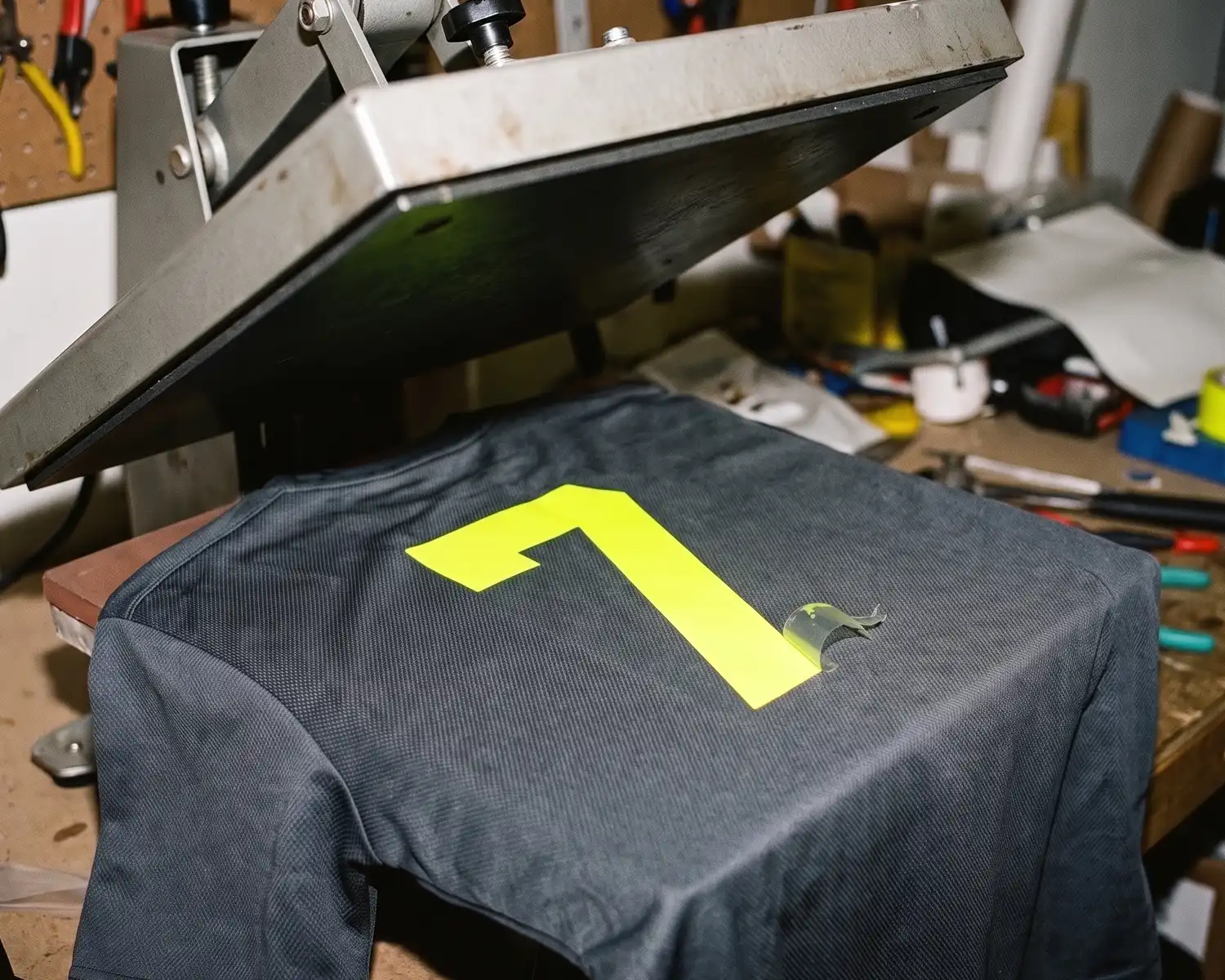
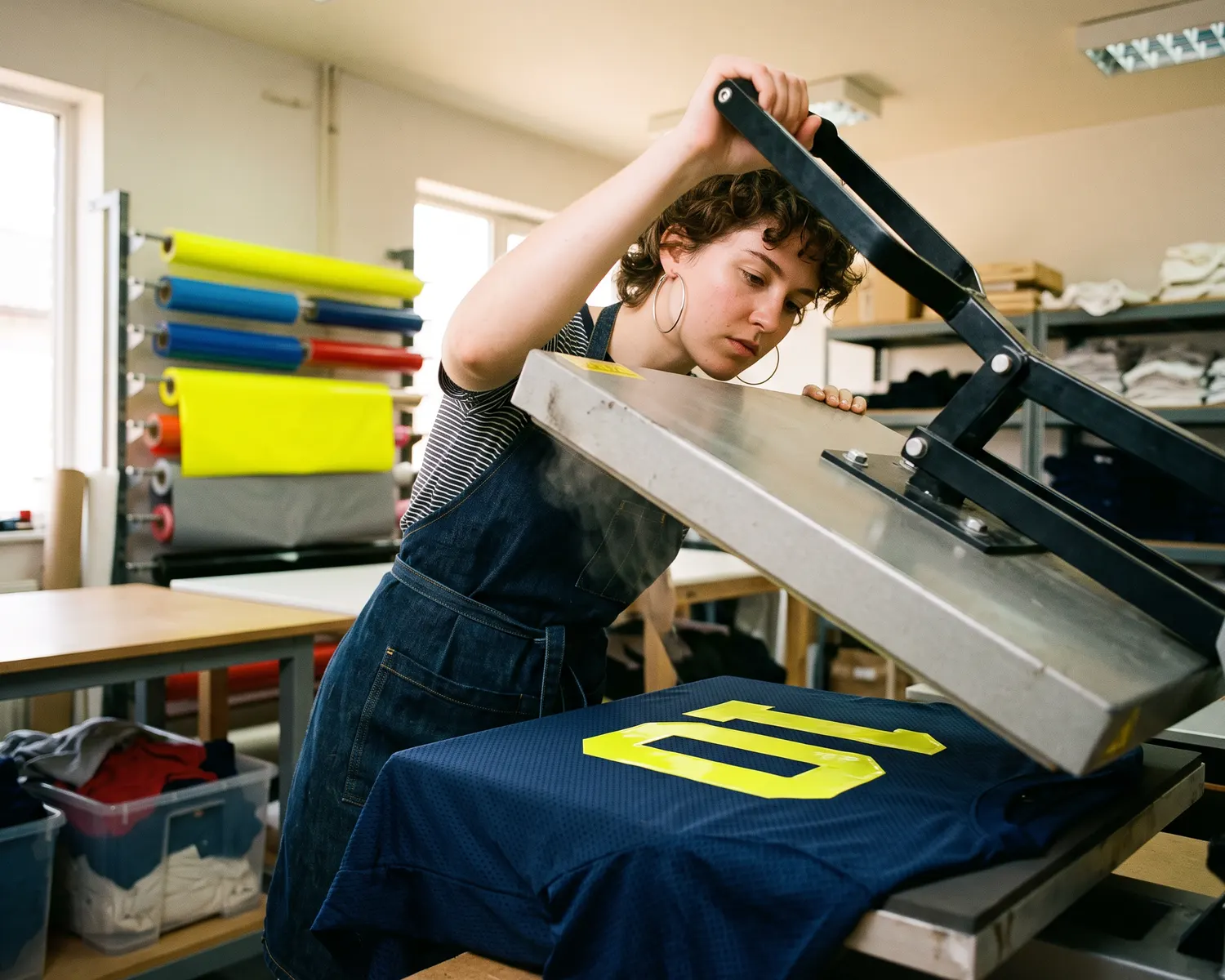
One jersey, a nickname and a number. Single-piece work: expect 5 to 15 euros depending on marking size, application included. The same nickname drops to around 3 euros per piece when the club orders a hundred at once: volume discounts in action.
Twenty t-shirts or sweatshirts with a one-color chest logo. On the surveyed price lists, the piece lands between 2.50 and 4.50 euros of marking, plus the fixed setup fee (11 to 15 euros for the batch). That is a marking budget in the range of 60 to 100 euros, textile not included. Two quotes on this precise request will separate the workshops.
A hundred pieces for an event. The per-piece price heads toward 1.60 to 2.50 euros at providers with public volume price lists. At this level, the real question is no longer price: it is lead time, application quality and wash resistance, none of which can be read off a price list.
Single piece or run: two different markets
For a single piece, you mostly pay human labor: the application, the calibration, the machine stopped just for you. The sports store and the local workshop are at ease on this ground, and the price generally sits between 5 and 15 euros depending on marking size.
In runs, you buy production: the per-piece price melts, minimums appear, and the quote replaces the displayed price list. This is the territory of flocking and transfer workshops, and this is where the gap between two quotes truly justifies comparing: on 50 pieces, a 2-euro difference per piece is 100 euros.
How to get YOUR price, the real one
The ranges above frame the market, but your own price comes down to three pieces of information: your design (size, colors), your quantity, and who supplies the textile. With those three elements, a workshop can quote within hours.
The right reflex, from about ten pieces: get AT LEAST two workshops to quote exactly the same request. It is the only comparison that matters, and it is exactly what the directory's quick quote allows. Below that, for one or two pieces, a store's or local workshop's displayed price list is enough: no point negotiating 3 euros.
One final reading tip: a quote well below the market deserves a question (which technique, which film, what wash resistance?), and a quote well above deserves the same. The ranges in this survey give you the playing field; the workshop that explains its price openly is usually the one worth it.
Find the workshop that will quote it right
Your final price will come from a conversation, not a table. To start it: find a workshop near you, send your design and your quantity, and compare two answers. That is precisely what this directory lists, city by city, technique by technique.
FAQ
Questions fréquentes
How much does jersey printing cost?
For a name and number applied to a single jersey, the market survey gives 5 to 15 euros depending on marking size. The same marking drops to around 3 euros per piece when a club orders a hundred jerseys at once.
Why do some workshops charge per square centimeter?
Because surface is the first cost driver of vinyl work: the bigger the design, the more film and application time it consumes. One public price list in the survey shows, for example, 1 euro per square centimeter as a base rate, then adjusted by quantity.
Is vinyl printing cheaper than embroidery?
In small runs, generally yes: embroidery requires heavier preparation and is paid for its premium finish and durability. In large runs, the gap narrows and the choice comes down to finish more than price.
Why does my quote include fixed fees?
These are preparation costs: the file, the proof (the preview you approve before production) and machine calibration. They are paid once per order, often 11 to 15 euros on the surveyed price lists: negligible across fifty pieces, price-doubling on a single one.
Does the displayed price include the t-shirt?
Not always, and it is the number one trap in comparisons. A marking-only price assumes you supply the textile; a complete-garment price includes it. Also check whether the rate excludes tax: it is common among professionals.
Passer à l'atelier
Vous savez ce qu'il vous faut. Trouvez l'atelier qui le fait.
L'annuaire recense les ateliers ville par ville, avec leurs techniques et leur contact direct. Un devis rapide vous répond sous 24 h.