In custom textiles, the minimum order quantity (MOQ) is the quantity below which a workshop will not produce: it covers their fixed setup costs. It varies by technique: high in screen printing, flexible in embroidery, from a single piece in DTG or DTF.
"Sorry, we don't go below 30 pieces." If you have just received that answer for your 8 t-shirts, this article is for you. The minimum order is neither a whim nor a polite way of turning you away: it is an economic reality of workshops, and once you understand it, you know exactly how to make a small order happen. Here is how.
The MOQ in plain words, and why it exists
In custom textiles as elsewhere, the minimum order quantity (MOQ) is the quantity below which a workshop will not produce. You will find it spelled out on workshop websites ("from 20 pieces"), or you will discover it at quote time.
Why this threshold exists: launching a production run costs the workshop a fixed amount of time, whatever the quantity. Setting up the machine, calibrating colors, stretching the screen printing screens, digitizing the embroidery: this work takes the same time for 5 pieces as for 100. Across 100 pieces, it dilutes and disappears into the price; across 5, it makes up most of the bill. Below a certain threshold, the workshop would work at a loss or would have to charge you a per-piece price nobody would accept. The minimum is not aimed at you: it is the point where the workshop's numbers add up.
Understanding this changes everything, because the conclusion follows on its own: the minimum depends on the TECHNIQUE and on the workshop's PROFILE. And so it can be worked around by choosing both correctly.
Minimums by technique: why they differ
Each customization technique has its own economics, so its own relationship with minimums.
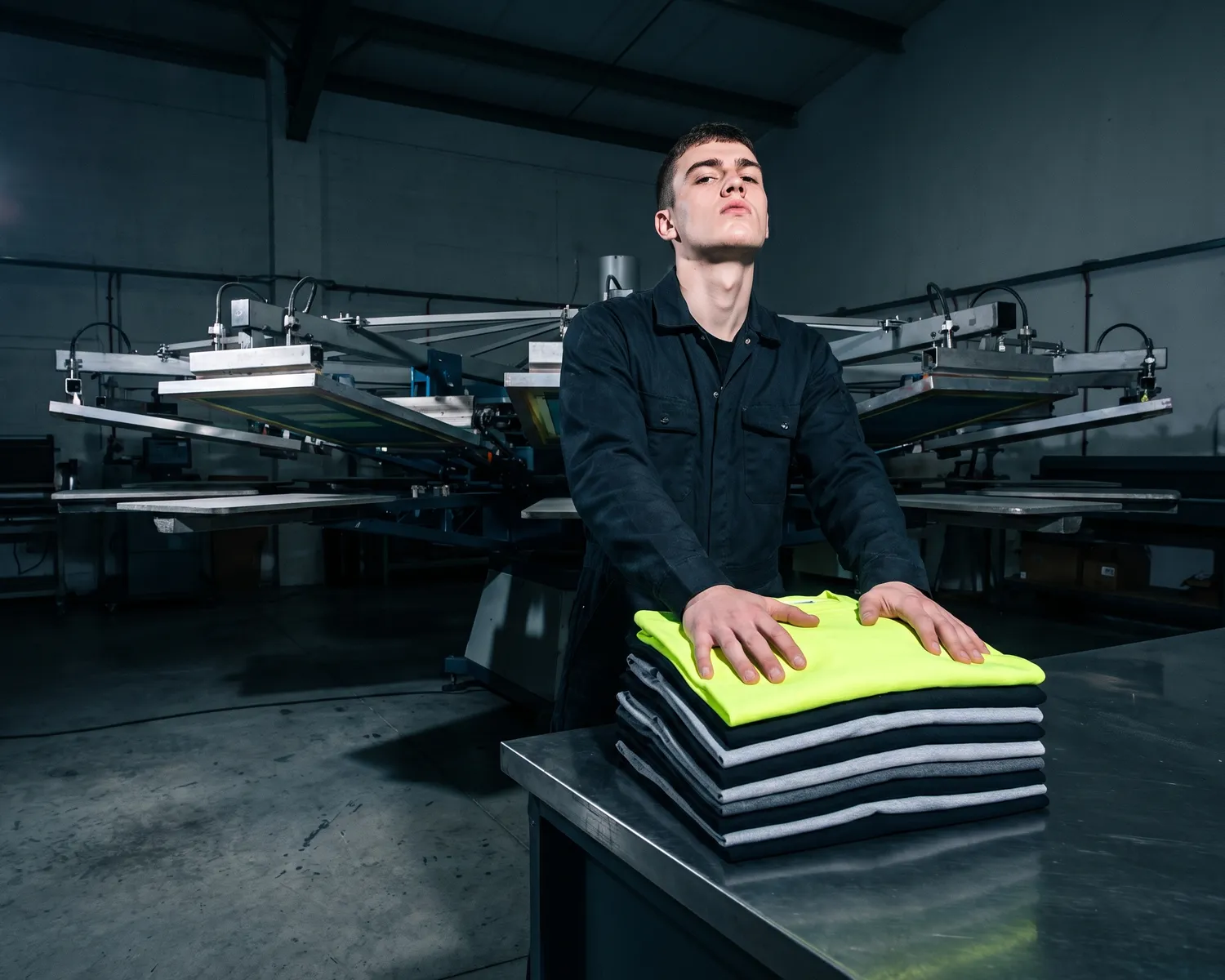
Screen printing is the most demanding. Each color in your design requires its own screen, prepared by hand before the first t-shirt. That setup work is what makes screen printing unbeatable on large runs and unwelcoming for small ones: its minimums are the highest in the trade, and that is structural.
Embroidery is more flexible than you would think. Its fixed cost is digitizing the logo into an embroidery file, paid once. After that, each piece goes through the machine individually: many workshops accept small embroidered quantities once the file is digitized.
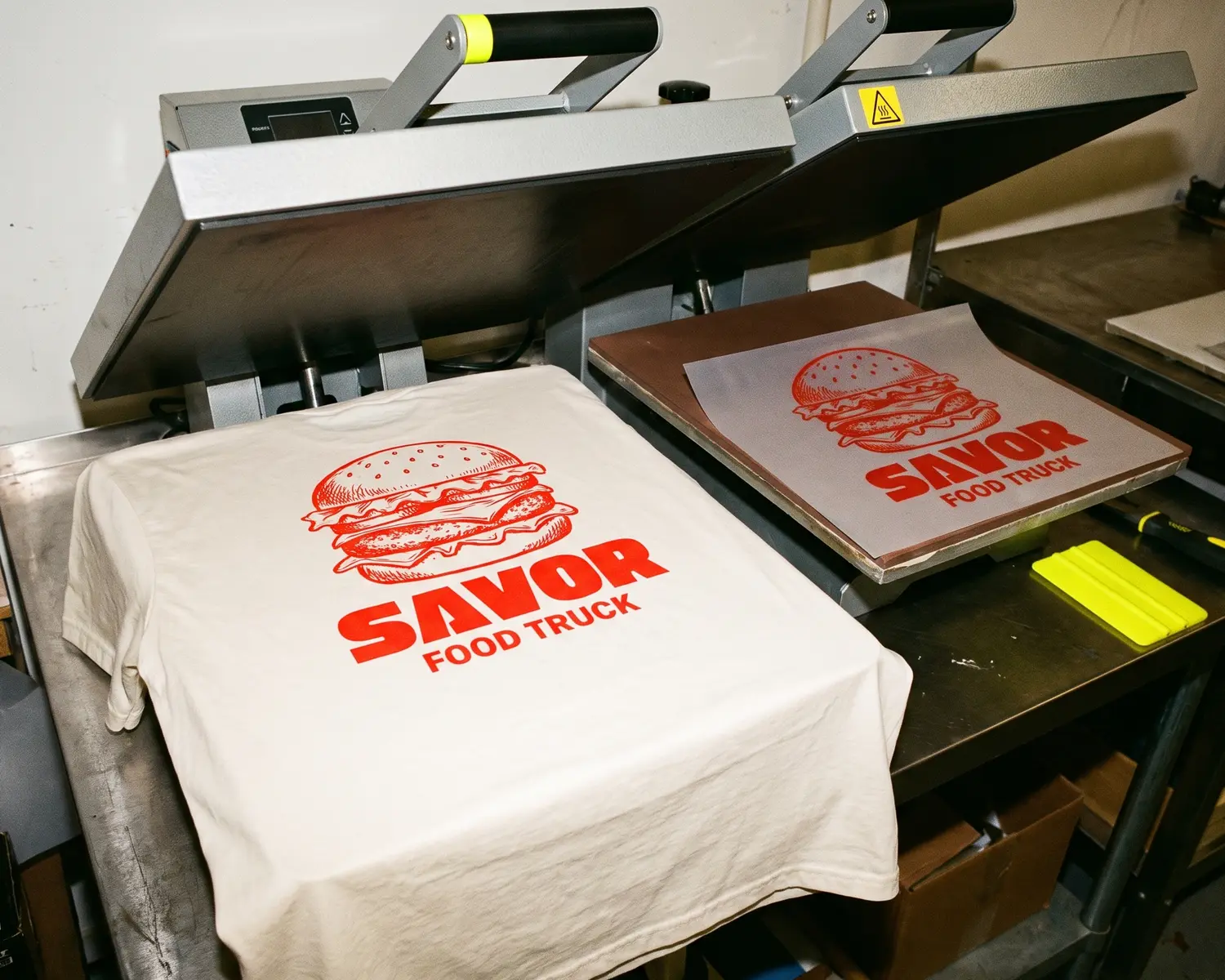
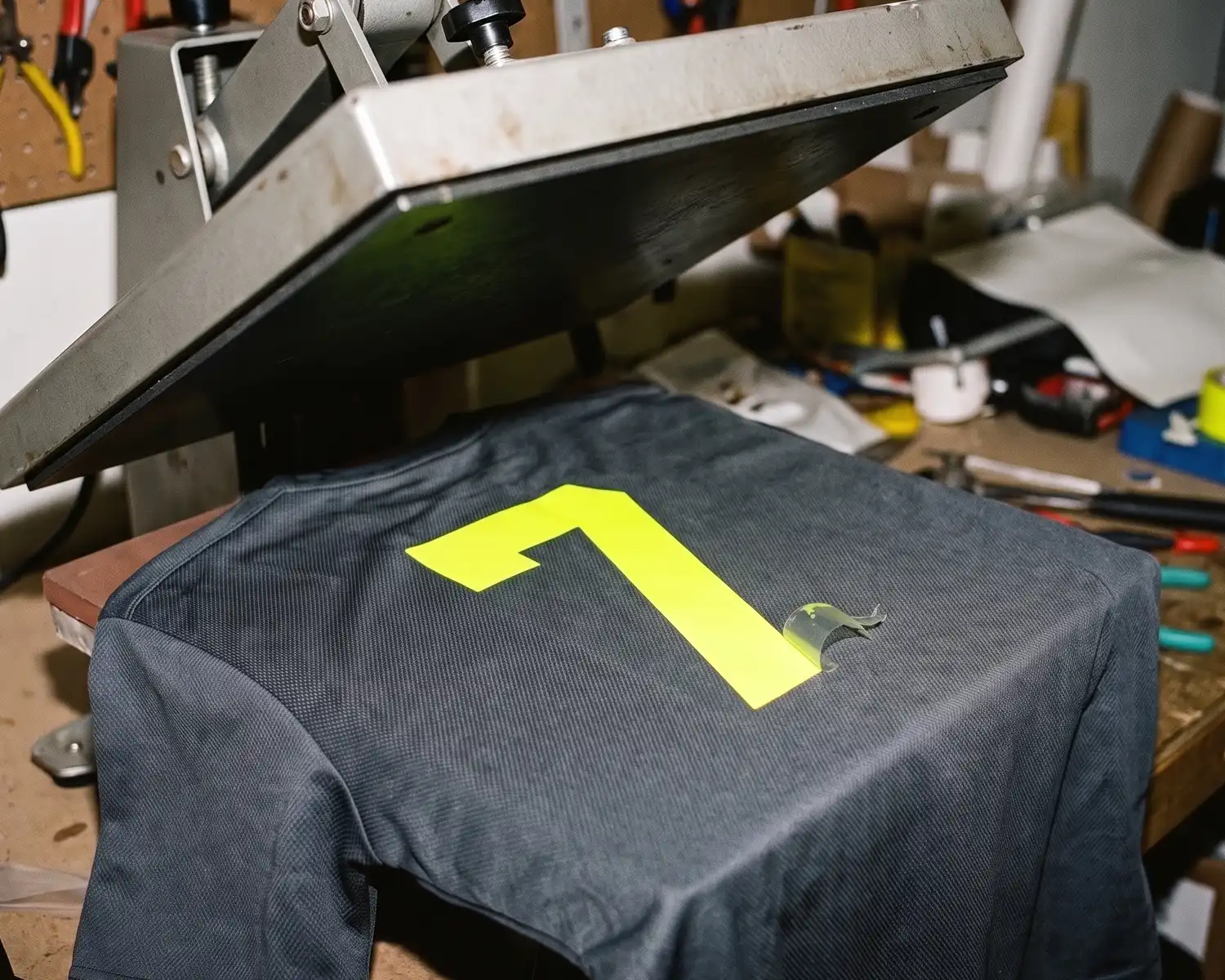
DTG and DTF are the single-piece techniques. Direct-to-garment printing (DTG) and digital transfer (DTF) require almost no setup: no screens, no per-color calibration. That is why single-piece customization exists, and it is the first serious lead when a small order is refused elsewhere.
Remember the logic rather than numbers: the more fixed setup a technique has, the higher its minimum climbs. Exact thresholds vary from workshop to workshop: they appear on listings and are confirmed at quote time.
The five honest ways around a minimum
1. Change technique rather than insisting. If screen printing refuses your 8 pieces, DTF or DTG will do them. The result differs a little (our screen printing or flex comparison shows what each technique renders), and it stays clean: for a small run, it is almost always the right answer.
2. Pool the order. The minimum is counted in pieces, not in people. The association gathering its members' orders, the club's two teams ordering together, the graduating class getting organized: going from 8 to 25 pieces changes the conversation with every workshop.
3. Accept the small-run surcharge. Some workshops agree to go below their usual threshold for a setup fee or a higher per-piece price. It is a legitimate arrangement (you are paying for the setup that does not dilute): compare it against the price of the no-minimum technique before saying yes.
4. Simplify the design. In screen printing, the minimum and the price rise with the number of colors, since each color has its own screen. A design brought down to one or two colors lowers the entry ticket. This lever only works for screen printing, but it can unlock a borderline order.
5. Look for the workshop built for small runs. This is the simplest and most overlooked workaround: minimums are not a law of the industry, they are each workshop's choice. Some are equipped and organized for single pieces and small quantities; they exist near you, and that is exactly what the listings in the directory let you spot before even asking for a quote.
What the minimum tells you about a workshop
One last reading key, and it will save you time: a workshop's minimum describes its trade, not its quality. A workshop with a high minimum is built for runs: big machines, sized teams, unbeatable per-piece prices at volume. A workshop with no minimum made the opposite choice: flexibility, single pieces, short lead times.
Neither is better than the other: they do not do the same job. Asking a large-run workshop for 8 pieces is like asking an industrial mill for one baguette: the answer will be no, and that no says nothing about the quality of the mill. The right approach is not to negotiate against a workshop's nature, it is to find the one whose trade matches your order. Your small run deserves a workshop that loves small runs: they exist, and there are more of them than you would think.
FAQ
Questions fréquentes
What is an MOQ?
MOQ stands for minimum order quantity: the number of pieces below which a workshop will not produce. In custom textiles, it reflects each technique's fixed setup costs, and every workshop sets its own.
Can you negotiate a minimum order quantity?
Sometimes, for a setup fee or a higher per-piece price: you are paying for the setup that does not dilute. But the real solution is often elsewhere: change technique, or choose a workshop built for small runs, rather than negotiating against the nature of the one refusing.
Which customization technique has no minimum?
DTG (direct-to-garment printing) and DTF work from a single piece: almost no fixed setup, so no structural threshold. It is the first lead when a small order is refused in screen printing.
Why does screen printing have high minimums?
Because each color in the design requires its own screen, prepared by hand before the first piece. That fixed work makes the technique unbeatable on large runs and unsuited to very small quantities: its minimum is structural, not commercial.
Is a high minimum the sign of a bad workshop?
No, it is the sign of a workshop built for runs: big machines, unbeatable prices at volume. A workshop with no minimum does the opposite job, flexibility and single pieces. The key is choosing the profile that matches your order, not judging one by the other's standards.
Passer à l'atelier
Vous savez ce qu'il vous faut. Trouvez l'atelier qui le fait.
L'annuaire recense les ateliers ville par ville, avec leurs techniques et leur contact direct. Un devis rapide vous répond sous 24 h.