Heat transfer or embroidery: the comparison
Embroidery sews the design into the fabric; heat transfer presses a film onto its surface. The first wins on durability and relief, the second on lightness and single-piece personalization. The right choice depends on the garment, the design and the use, not on the technique itself.
The essentials in 4 points:
- The difference fits in one sentence: thread sewn into the textile versus a film heat-pressed onto its surface.
- Embroidery: relief, a textile feel, durability that lasts; its home ground, logos on polos, jackets, heavy knits and caps.
- Heat transfer (vinyl film, most of the time; what French speakers call "flocage"): solid colors and sharp cut-outs, from a single piece; its home ground, names, numbers and personalization.
- Neither is better in itself: the verdict is decided use by use, and a workshop equipped with both will confirm it on your own fabric.
Two opposite ways of marking a textile
Everything else follows from this starting point. Embroidery is sewing: a machine stitches the design into the thickness of the fabric, thread by thread, stitch by stitch. The result does not sit ON the garment, it becomes part of it.
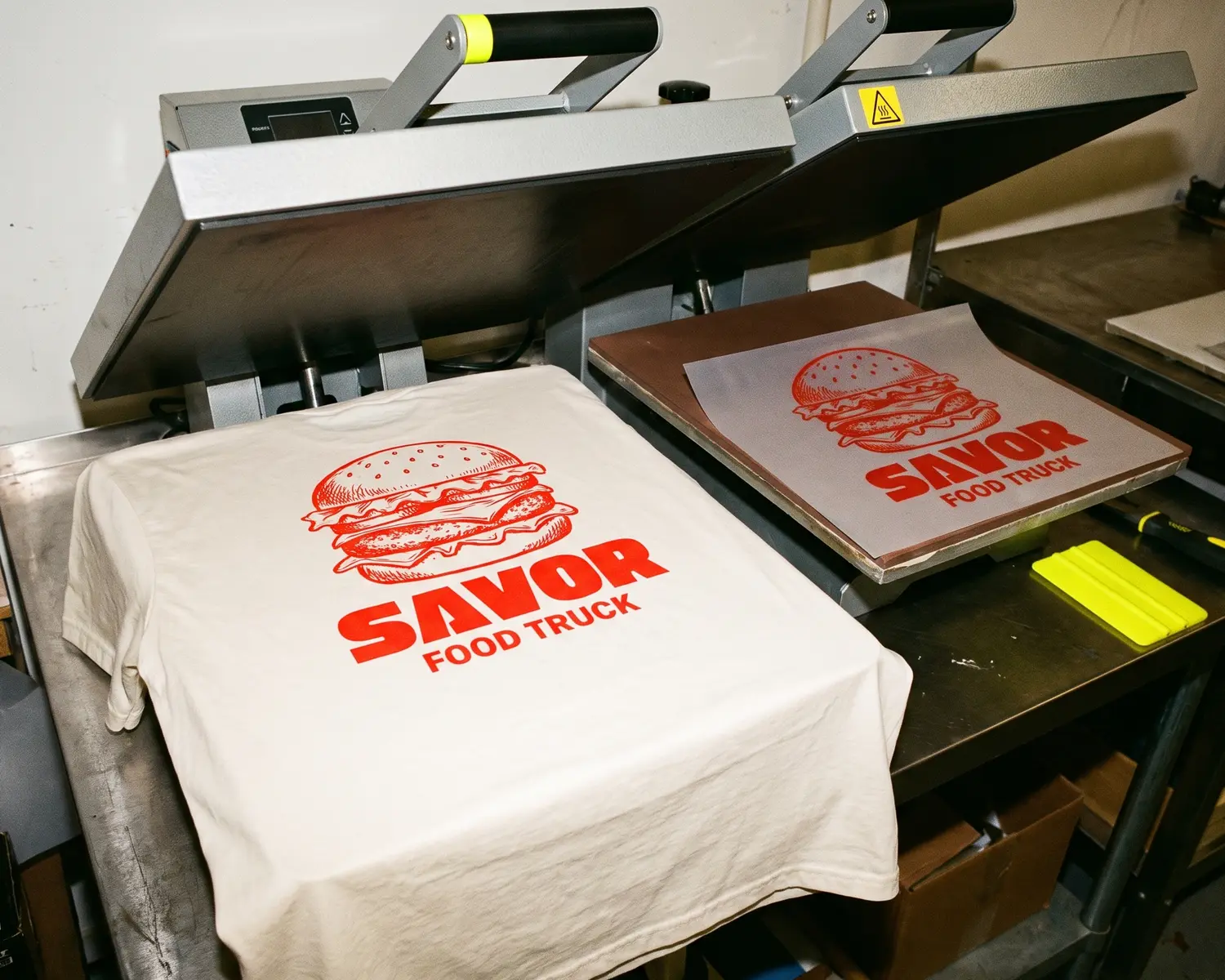
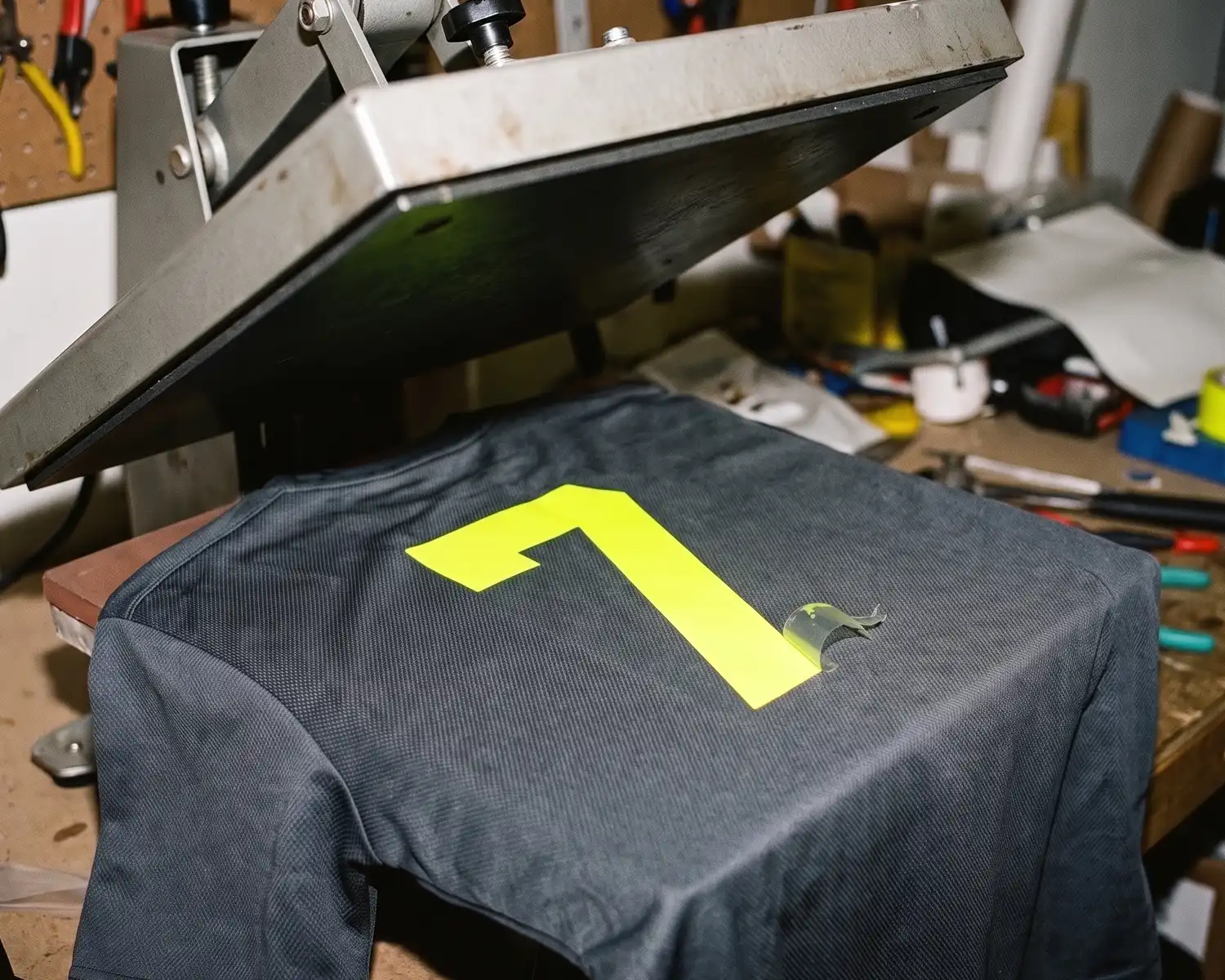
Heat transfer is placement: the design is cut out of a flexible vinyl film, then fixed to the surface of the textile with a heat press. The word actually covers several realities a workshop never confuses: in everyday speech, it has come to mean almost any heat-applied marking.
Sewing versus placing, depth versus surface: keep that image in mind, it already answers half of your questions.
Look, feel, durability: what your eyes and hands will notice
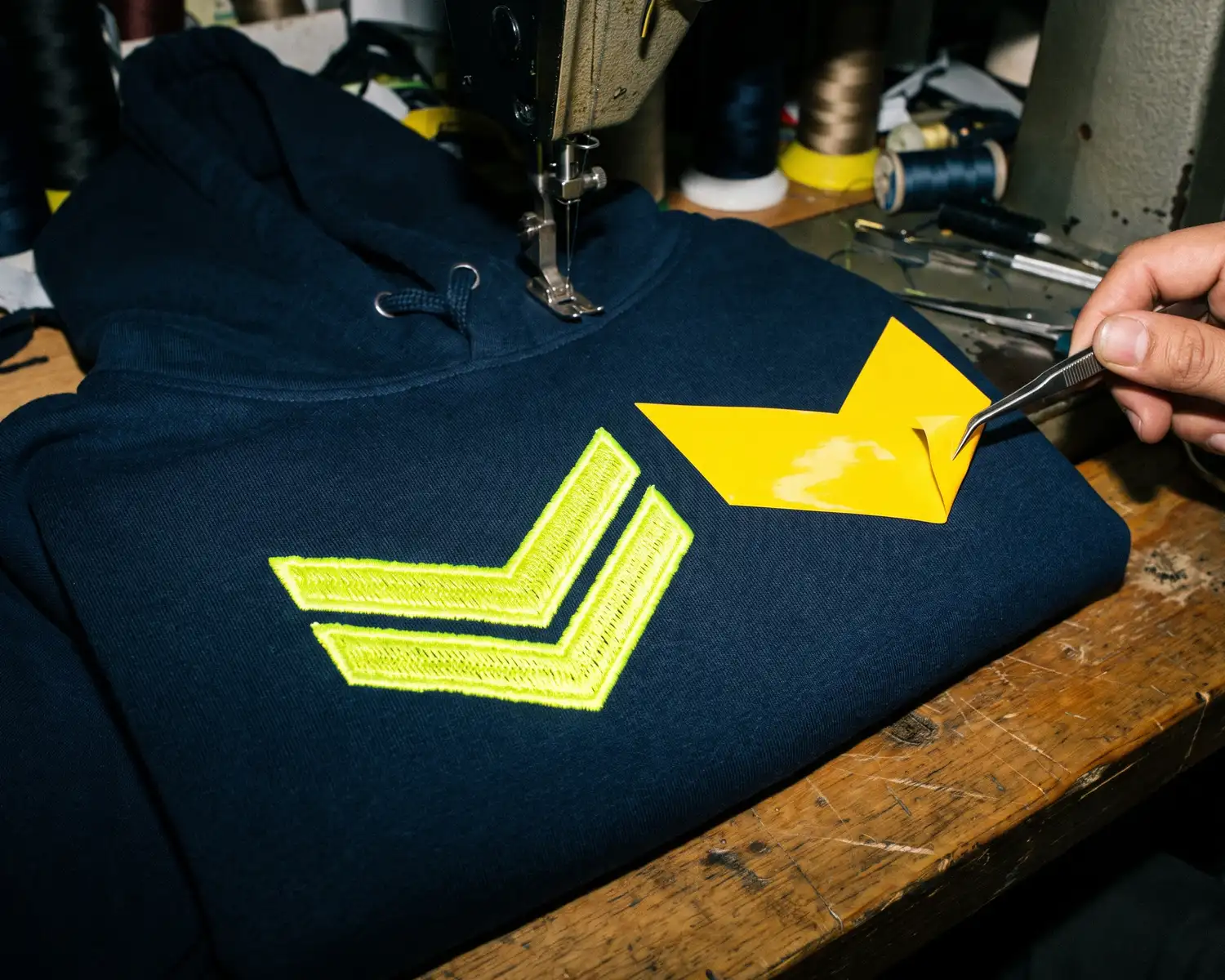
The look. Embroidery gives relief and texture: the thread catches the light, the design is seen AND felt. It is a finished-garment look, the one you know from branded polos and club badges. Vinyl gives a clean flat surface, strong colors and precise outlines: a graphic look, closer to print.
The feel. An embroidered design can be felt under the finger, and it has a reverse side: on the back of the fabric, the stitches are there, sometimes covered with a backing. Vinyl stays thin and supple, almost unnoticeable on a light t-shirt.
Durability. The thread is locked into the knit: an embroidered design generally lives as long as the garment and cannot peel off. Vinyl remains a film sitting on the surface: properly applied, it survives many washes, but it can crack or lift over time, especially with hot washes and tumble drying. That is not a hidden flaw, it is its nature.
Price: two logics, no winner
Embroidery is mostly paid upfront: the design must be programmed (workshops count in stitches), then each garment goes through the machine. Vinyl is paid per piece: cutting, weeding, pressing, and the cost climbs with the number of colors.
The practical consequence: the question "which one is cheaper?" has no single answer; it depends on your quantity, your design and its number of colors. The market ranges, case by case, live in the price survey we keep up to date. And for your exact design, two quotes compared on the same artwork will tell you more than any average.
The comparison table
| Embroidery | Heat transfer (vinyl) | |
|---|---|---|
| Principle | thread sewn into the fabric | film cut out, heat-pressed |
| Look | relief, texture, premium finish | clean flat surface, strong colors |
| Feel | textured, noticeable reverse side | thin and supple |
| Durability | that of the garment, cannot peel | good, but a surface film: cracking possible |
| Home ground | polos, jackets, heavy knits, caps | t-shirts, jerseys, names and numbers, single pieces |
| Limits | puckers thin fabrics, tiny details lost | no gradients or photos, cost per color |
| Price logic | programming then decreasing | per piece and per color |
The verdict, use by use
A company logo on polos or jackets: embroidery. The relief reads as serious, the durability outlasts the seasons, and it is the use for which the technique has remained the reference.
Names, numbers, single-piece personalization: vinyl. Its historic niche: a name is cut and pressed in minutes, with no prior programming.
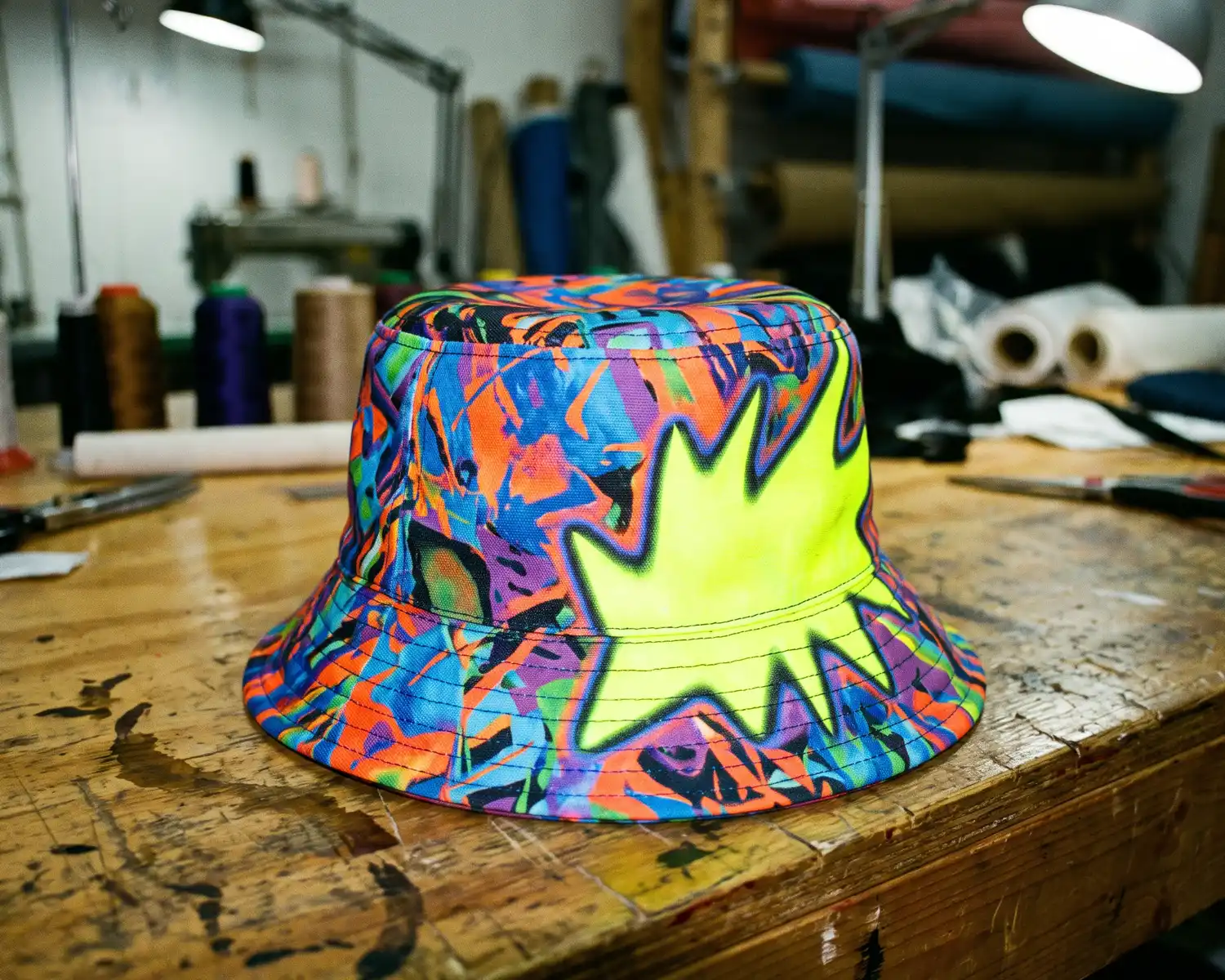
A large colorful design, a gradient, a photo: neither. Embroidery loses the details, vinyl does not do gradients. That is the territory of DTF transfer or screen printing, depending on quantity.
A thin or technical fabric: vinyl, with care. Embroidery needs material to bite into: on a light jersey, it puckers and deforms. A thin film respects the drape of the garment; on heat-sensitive fabrics, the workshop adjusts its press.
A cap, a beanie: embroidery. Curved surfaces and heavy knits are its element, and it is what you will see on nearly every cap sold anywhere.
The workshop first, the technique second
Here is the advice eighteen years in the trade taught me: do not come with a technique, come with your project. Show your design, your fabric and your quantity to a workshop near you: on a sample, the difference in look is judged in seconds. And if the workshop only practices one of the two techniques, keep the reflex that applies to every marking: ask what the other option would look like, and why the one they offer is the right one for your project.
FAQ
Questions fréquentes
What is the difference between heat transfer and embroidery?
Heat transfer fixes a cut-out film onto the surface of the textile with heat and pressure; embroidery sews the design into the fabric with thread. The first gives a clean, supple flat surface, the second a textured relief that becomes part of the garment.
Embroidery or heat transfer for workwear?
Embroidery, in the vast majority of cases: worn and washed hard, workwear needs a marking that lives as long as it does. Vinyl keeps its place for one-off identifications, a name or a role that changes.
Can embroidery and heat transfer be combined on the same garment?
Yes, and it is common: an embroidered logo on the chest for durability and relief, a name or number in vinyl on the back for personalization. The two techniques do not exclude each other, they share the roles on the same garment.
Does embroidery work on every garment?
No. It excels on heavy knits, polos, sweatshirts, jackets and caps. On thin or stretchy fabrics, the stitches pucker and deform the textile: a serious workshop will then point you to a surface marking instead.
How long does embroidery last?
As a rule, as long as the garment itself. The thread is sewn into the knit: it cannot peel off and survives repeated washing. That is why daily-worn workwear is so often embroidered.
Passer à l'atelier
Vous savez ce qu'il vous faut. Trouvez l'atelier qui le fait.
L'annuaire recense les ateliers ville par ville, avec leurs techniques et leur contact direct. Un devis rapide vous répond sous 24 h.